Episode 3 - A Sudden Illness
Kandulu and his uncle Domingos in northern Mozambique narrate the onset of a sudden illness and how they, along with other family members, navigated seeking treatment.
Across Africa, many societies consider medical decision making to be the domain of a “therapy management group” rather than the individual or a nuclear family. In this case, Domingos’ family was slow to respond, requiring that his wife and her kin take decisive action.
Despite a nephew eventually arriving by motorcycle to transport his uncle to the hospital, the family opted to visit a vernacular healer in his own home village, where he ingested pounded roots and had other medicines applied as a salve to small incisions in his skin. His condition improves, indicating that witchcraft (rather than natural causes) is to blame.
Despite the positive results, Kandulu laments how many vernacular healers are charlatans who cannot be trusted and affirms his own preference for medical treatment at a biomedical facility.
In Ciyawo with English subtitles uploaded to YouTube. Select other languages for auto translation options.
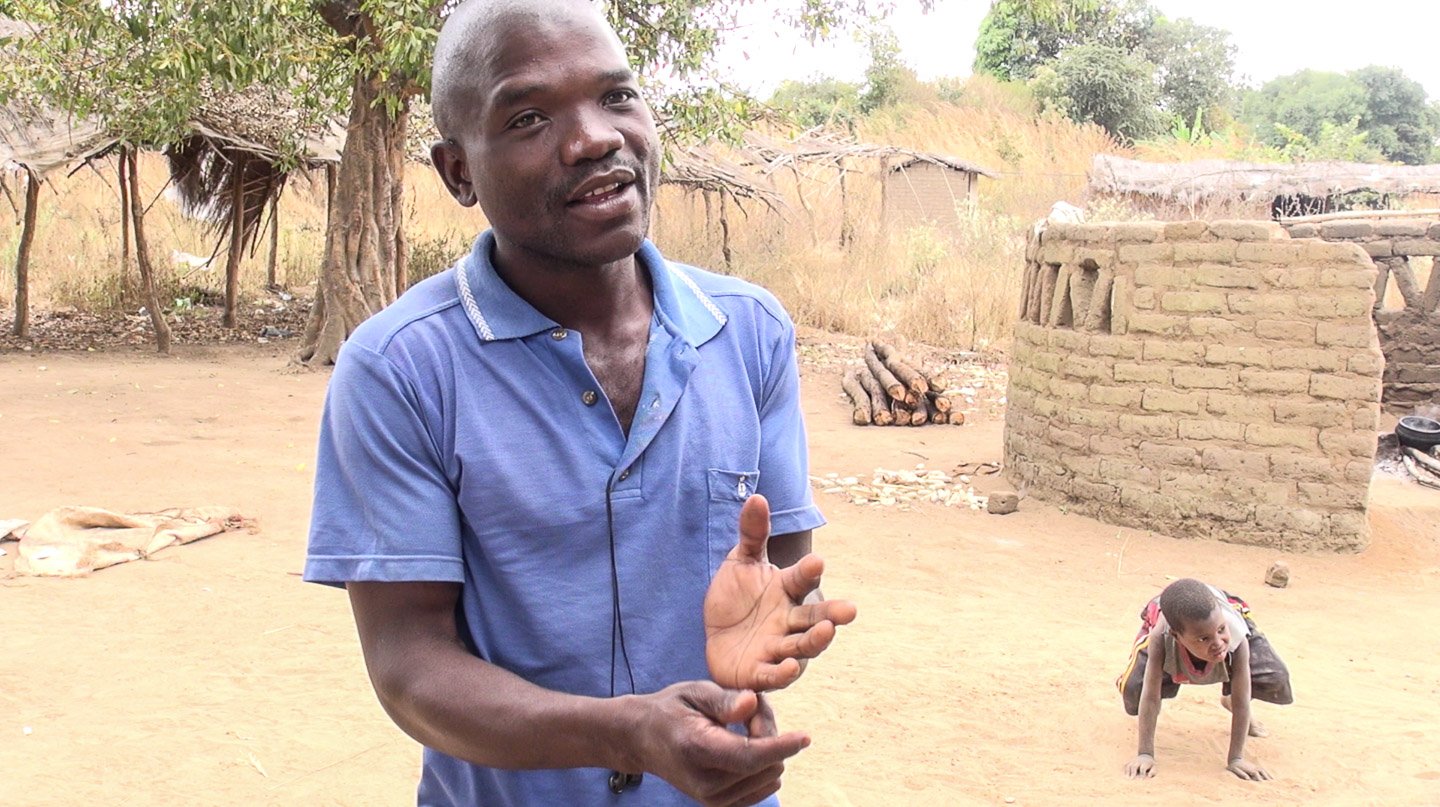
Kandulu Wilo tells the story of how his uncle came down with and navigated a sudden illness
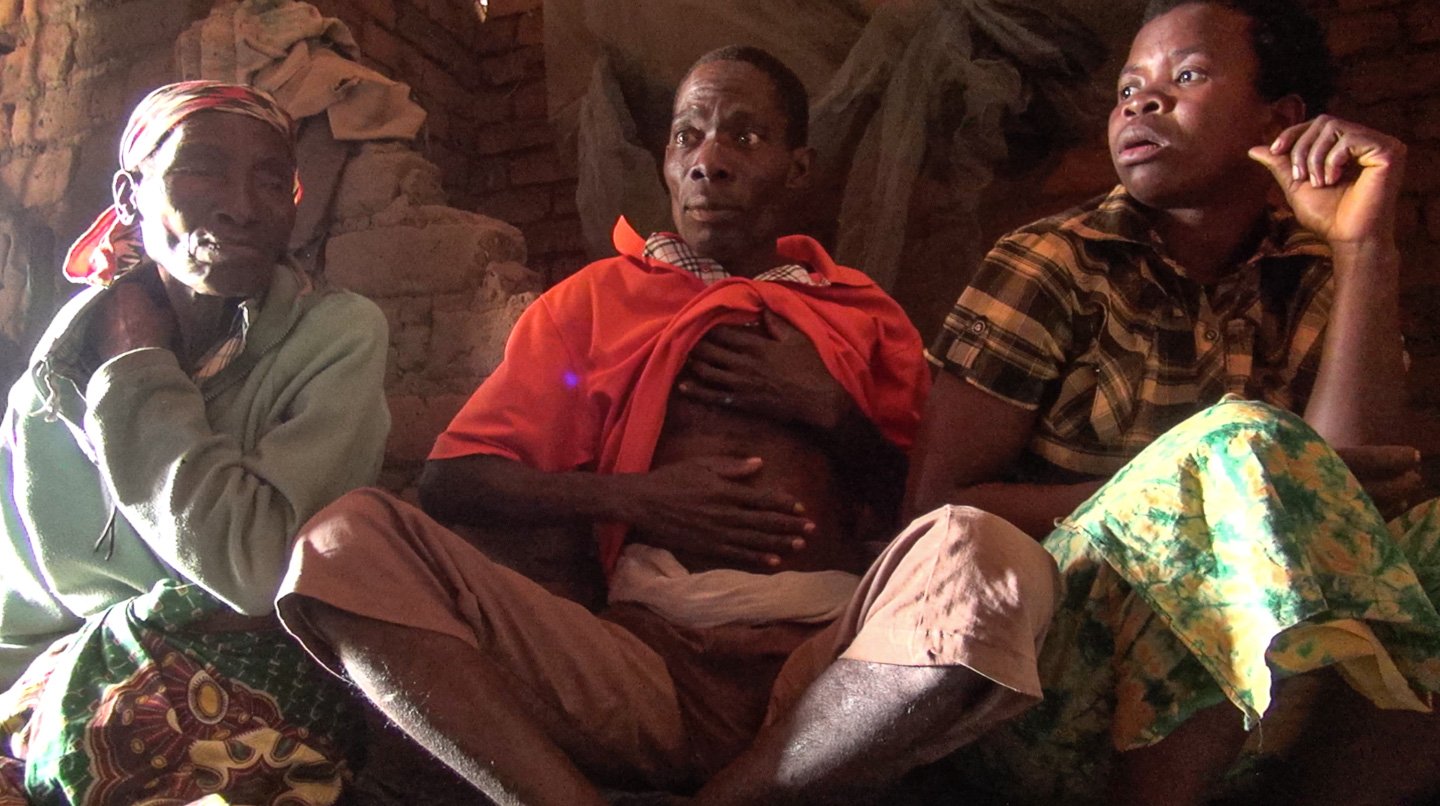
Kandulu's uncle Domingos Witinesse Ncuanda shares about his recent health scare
Viewing Guide
Student Viewing Guide prepared by Arianna Huhn, California State University San Bernardino. Email: ahuhn@csusb.edu
-
Kandulu and his uncle Domingos narrate the onset of a sudden illness and how they, along with other family members, navigated seeking treatment. Across Africa, many societies consider medical decision making to be the domain of a “therapy management group” rather than the individual or a nuclear family. In this case, Domingos’ family was slow to respond, requiring that his wife and her kin take decisive action. Despite a nephew eventually arriving by motorcycle to transport his uncle to the hospital, Domingos opted to visit a vernacular healer in his own home village, where he ingested pounded roots and had other medicines applied as a salve to small incisions in his skin. His condition improves, indicating that witchcraft (rather than natural causes) is to blame. Despite the positive results, Kandulu laments how many vernacular healers are charlatans who cannot be trusted and affirms his own preference for medical treatment at a biomedical facility.
-
Therapy Management Group
Matrilocality
Illness Narrative
Witchcraft
Pharmacopia
Dermal abrasion
Vernacular Healer
Critical Thinking Questions
-
Collectivist notions of personhood stress interdependence as essential for wellness, as opposed to individualist notions of personhood that conceive of interdependence as a weakness.
-
Consider what it means to be responsible for somebody and what rights are conferred. An alternate translation for this text speaks to “ownership” of each individual in a collective group. How does the idea of ownership for one another feel to you? If you feel negative towards the concept, consider why, with reference to your own cultural values and assumptions.
-
Consider whether these are factors you would have expected. Why or why not?
-
Illness narratives - where a patient recounts their experiences with an illness - are advocated by some medical anthropologists and physicians as useful for understanding a patient’s views about their condition, and particularly the whys and hows of causation and treatment.
Debate:
How do cell phones transform health decision making? Are there only benefits, or are there also potential perils?
Do therapy management groups exist in your family, culture, or society?
Contextual Notes
-
The term “therapy management group” was first articulated by John Janzen in his 1978 ethnography The Quest for Therapy in Lower Zaire. The concept describes the constellation of individuals who are together responsible for the well-being of an individual. This group emerges when the individual is ill or experiencing other forms of distress or crisis to offer support and to evaluate options for diagnosis and redressive action.
-
According to research by Paul O Ouma and Victor A Alegana, in 2015 49.9% of the population in Mozambique lived outside of a two-hour travel time to reach one the country’s 61 public hospitals. This is higher than all but eight other African nations (of note, in Malawi it is only 7.2% of the population that falls into this category in relation to the country’s 56 public hospitals). Proximity can enable or limit access to biomedical care, but distance is not the only factor that determines whether or not someone decides to visit a hospital.
-
According to USAID, over seventy percent of rural residents in sub-Saharan Africa travel long distances without roads to complete everyday tasks like going to work, attending school, or reaching a hospital. Many use bicycles or motorcycles to transport people and goods. While extant data suggest that household bicycle ownership is generally around 20% sub-Saharan Africa, it is higher in East Africa (including Malawi and Tanzania, which border Mozambique) and in West Africa (with the highest rates -- at nearly 80% household bicycle ownership -- in Burkina Faso).
-
The spread of Islam to Africa has been traced to the 7th century. Today, nearly one out of three Muslims lives on the African continent. One prominent feature of this world religion is the holy month of Ramadan, which takes place each year about 10-12 days earlier than that previous (meaning it takes place in every season over 33 years). Ramadan is a time for introspection and prayer. Fasting during daylight hours during Ramadan is one way of demonstrating restraint, as a form of atonement for sins. In addition to food, those observing Ramadan are to avoid between dawn and dusk drinking liquids, sexual relations, and any immoral behaviors. The end of Ramadan is celebrated with the feasting and celebrations of Eid al-Fitr.
-
When married couples typically live in the vicinity of a woman’s family, this residence pattern is known as matrilocality. This is distinct from patrilocality, where the couple typically lives near a man’s family. Matrilocality is most common in societies that practice horticulture (small-scale agriculture), especially where women’s contributions to farm labor are high and polygamy is low. Societies with a matrilocal residence pattern also often require for a man to perform labor for a woman’s family (called “brideservice”) before their marriage is allowed.
Digging Deeper: Questions to spark further discussion about the film
Does culture provide Domingos with a set of rules, a framework in which to act, or something else? How does culture impact his decision making?
What stands out in Domingos’ narrative? What about Kandulu’s? What is your interpretation of the instances where the same points are relayed differently by each man?
Why would Kandulu be afraid of “going against moral codes” by taking his aunt to the hospital?
How does Domingos know that he is better? What signs does he report? Are his understandings of health aligned with those of biomedicine, or different?